Ingrown hairs: when the daily routine becomes a burden
Do you know this? You want silky smooth skin, but shortly after shaving or epilating, the unpleasant side effects follow: Red pustules, painful nodules and stubborn inflammation. Ingrown hairs are not just an aesthetic problem, but for many a painful cycle that limits their self-confidence in everyday life. But why does the skin put up such a strong resistance to hair removal and how can this cycle be broken permanently?
Ingrown hairs: the most important facts in brief
- Ingrown hairs occur when regrowing hairs remain trapped under the skin or grow back into the skin.
- Common consequences are redness, pustules, painful nodules and localised inflammation.
- Intimate areas, armpits, legs and other regularly shaved parts of the body are particularly affected.
- The causes are often shaving against the direction of growth, blunt blades, friction or thick or curly hair.
- Ingrown hairs can often only be permanently reduced if hair growth is reduced in the long term - e.g. through professional laser hair removal.
The mechanism: Why hair grows in
A hair grows in when it does not emerge freely from the hair canal after removal, but remains trapped under the skin surface or grows back into the tissue from the side. Particularly after a very short shave or waxing, the regrowing hair often emerges at an unfavourable angle. Typical problem areas are the intimate area, the armpits and the legs, as the skin is often soft here, but the hair is strong or curved.
The reaction: This is what happens in the skin when hair grows in
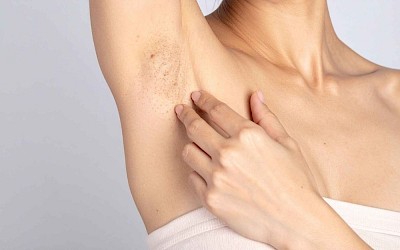
If a hair grows back into the skin, the body regards it as a foreign body. The immune system reacts immediately with a local inflammation:
- Redness and swelling: The affected area becomes sensitive to pressure and painful.
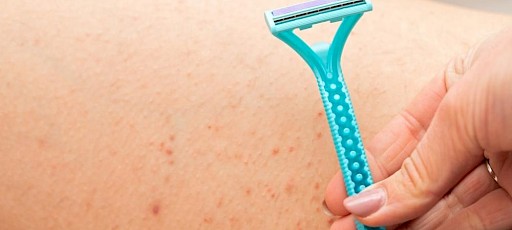
- Nodules and pustules: Pimple-like changes often form. This is usually not due to a lack of hygiene, but purely mechanical irritation caused by the stuck hair. If this process is repeated in the same place, the tissue can thicken over time. Stubborn hardening or dark discolouration (pigment spots) develop, which often remain visible for months.
In many cases, it is not "too much hair" that is the immediate problem, but the way the hair grows back and how the skin reacts to it. This is precisely why ingrown hairs can return even if those affected subjectively feel that they have done everything right when shaving.
Why are ingrown hairs often painful or sensitive to pressure?
If the skin around the ingrown hair becomes inflamed, this often leads to localised swelling and irritation of the sensitive skin nerves. This explains why ingrown hairs are often not only visible, but also palpable, pressure-sensitive or painful. Even if no pus is visible, the area can still be very uncomfortable.
It is important to note that this does not automatically mean that there is always an immediate bacterial infection. It is often initially an irritation or an inflammatory reaction to the ingrown hair itself. In some cases, a bacterial infection may also be involved.
Why can recurring "knots or hardenings" develop?
If the same mechanism is repeated again and again, the skin can react more sensitively in the long term. Repeated inflammation caused by ingrown hairs can lead to the tissue around the hair follicle thickening and the formation of stubborn lumps or hardened areas. In more severe cases, scar-like changes can also remain. This explains why some people suffer from recurring hardening in the same areas over a long period of time.
Ingrown hairs are not a hygiene problem
Ingrown hairs do not occur because someone is "unhygienic" or cares for their skin incorrectly. On the contrary: people who shave regularly and attach great importance to well-groomed skin are often affected. The trigger is not a lack of cleanliness, but a mechanical-biological process involving hair structure, skin reaction and the type of hair removal.
Equally important is relief elsewhere: ingrown hairs are not an individual failure. Many sufferers believe they have "problematic skin" or are doing something wrong. In fact, the cause usually lies in the combination of hair, skin and technique - for example with strong or curved hair, sensitive skin and regular close shaving.
Why does the problem often feel so persistent?
Many people are familiar with this exact process: The area heals, then after the next shave it starts all over again - often even in the same region. This can be easily explained medically. As long as hair is regularly removed very briefly, each new shave can set the same process in motion again. This creates a recurring cycle of shaving, ingrowth, local inflammation and temporary healing.
Although a gentler shaving technique can reduce the risk, it does not always completely eliminate the tendency. The problem can therefore persist for a longer period of time, especially if the hair structure or skin is sensitive.
When a longer-term hair reduction can be useful
If ingrown hairs are repeatedly triggered by regular conventional hair removal, a longer-term reduction in hair growth may make sense. The key idea here is not that this will make every individual predisposition disappear, but that fewer hairs growing back can also mean fewer opportunities for new ingrown hairs.
As hair growth decreases, stressful factors can be reduced: there are fewer sharp hair tips growing back, the skin is less mechanically irritated and the cycle of shaving, renewed ingrowth and inflammation can be triggered less frequently. This effect is not usually sudden, but rather gradual. With less hair growing back, the skin has more opportunity to calm down.
It is important to make a sober categorisation: Permanent hair removal is not automatically suitable for every skin situation or every hair structure, but can be a sensible option in suitable cases if the recurring cycle of hair removal and ingrowth is the main problem.
The solution for ingrown hairs: why laser hair removal is a way out

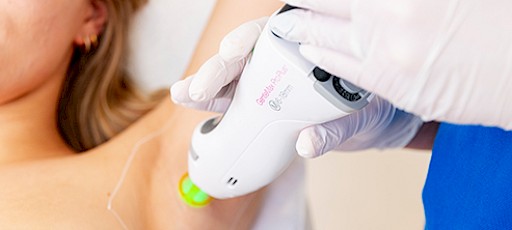
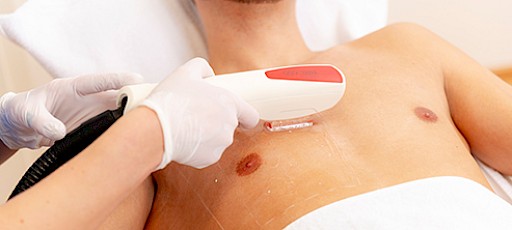
If you want to permanently end the cycle of shaving, inflammation and healing, laser hair removal is a sensible approach. In contrast to short-term methods, the laser tackles the cause directly:
- Destroying the root: the laser light is absorbed by the hair's pigment and converted into heat. This heat specifically cauterises the hair root. Where no more hair grows, logically nothing can grow in.
- Change in hair structure: Even after the first treatment, the remaining hair grows back much finer and softer. These fine hairs no longer have the power to pierce the skin or cause painful inflammation.
- Skin regeneration: As the constant mechanical irritation caused by shaving is eliminated, the skin finally gets the chance to regenerate deeply. Existing inflammation heals and the skin's appearance becomes calm, even and smooth in the long term.
Why technical expertise and quality are irreplaceable
Because ingrown hairs are often accompanied by inflammation and irritated areas of skin, choosing the right treatment partner is crucial. Professional laser therapy is much more than just operating a device. Only in-depth specialist knowledge of skin physiology, the different growth phases of the hair and precise adjustment of the energy parameters enables safe treatment.
High-quality, medically certified laser systems in expert hands guarantee that the hair root is effectively destroyed without damaging the surrounding, often already damaged tissue. This combination of technical precision and professional expertise is the only way to avoid complications such as pigmentation disorders and achieve a result that soothes the skin in the long term.
Conclusion: How you can prevent ingrown hairs
Ingrown hairs usually occur when a regrowing hair does not emerge freely from the skin, but remains trapped under the skin or penetrates back into it. The result can be a localised inflammatory reaction with redness, nodules, pustules or pressure pain. The decisive factor here is not just the hair itself, but the interaction between hair structure, skin reaction and the type of hair removal.
While conventional methods only combat the symptoms of ingrown hairs, laser therapy offers a causal solution. It frees the skin from the constant burden of regrowing stubble and gives you back the freedom to feel completely comfortable in your skin again - without pain, without pustules, but permanently smooth.
Are you interested in laser hair removal?
Arrange your free consultation or trial appointment!




Frequently asked questions about ingrown hairs
Ingrown hairs occur when a hair does not grow out of the skin properly after shaving or hair removal, but remains trapped under the skin or grows back to the side.
The ingrown hair often causes a local inflammatory reaction. This can result in pressure pain, redness, swelling and sensitive nodules.
The genital area, armpits, legs, neck and beard area - i.e. regions with regular shaving or strong hair growth - are particularly frequently affected.
Gentle exfoliation, moisturising, sharp razor blades and shaving in the direction of growth can help to reduce ingrown hairs.
Many sufferers fall into a cycle of shaving, renewed ingrowth and inflammation. Curly or thick hair in particular tends to grow back into the skin.
No. Ingrown hairs are usually caused by hair structure, skin sensitivity and mechanical irritation - not by a lack of hygiene.
Yes, because no hair grows back and there is no need to shave, the risk of ingrown hairs is also reduced in the long term.
If severe pain, large inflammations, lumps or recurring complaints occur, the skin should be medically examined.
Ingrown hairs usually heal on their own and do not necessarily need to be removed. The healing process usually takes about 1-2 weeks.