
Strawberry skin: Understand the causes and finally get visibly smoother skin
Summer is just around the corner, the clothes are getting shorter, but when you look in the mirror you notice it: Lots of small, dark or red spots dot your legs. This phenomenon is aptly called "strawberry skin", as the structure of the skin is visually reminiscent of the surface of a strawberry.
What many people don't realise: Strawberry skin is not a fate you have to resign yourself to. It is a clear signal from your skin that conventional hair removal methods are pushing you to your limits.
But the good news is that if you know the cause, you can improve the appearance of your skin in a targeted manner.
The most important facts about strawberry skin in a nutshell
Strawberry skin is not a medical term, but describes a typical skin appearance with dark or reddish spots
Common causes are visible hair stubble, ingrown hairs, shaving irritation or blocked follicle openings
Care measures such as peelings can help, but often do not solve the cause
Permanent laser hair removal starts at the root of the hair and can improve the appearance of the skin in the long term
What is strawberry skin?
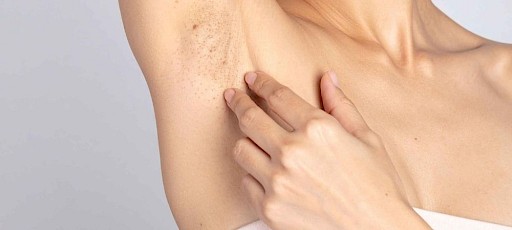
"Strawberry skin" describes the appearance of small dark spots on the skin, usually on the legs. The skin is visually reminiscent of the surface of a strawberry.
Important to understand: It is not a diagnosis, but a visible skin condition with different causes.
Common causes of hypertrichosis
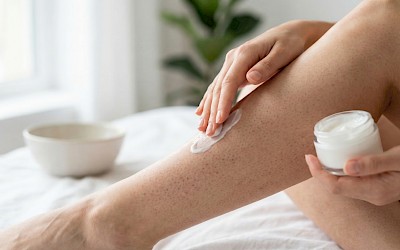
The skin appearance of "strawberry legs" is favoured by various factors:
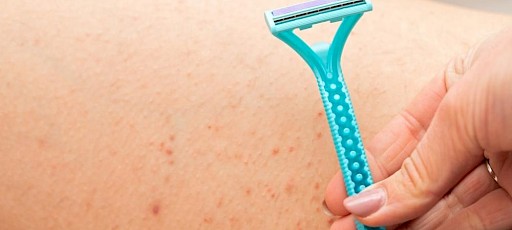
Visible hair stubble: After shaving, hair remnants remain visible under the skin. This results in the typical dark spots, especially with dark hair.
Ingrown hairs: If hair continues to grow under the skin, small inflammations, redness and an uneven skin texture occur.
Shaving irritation (pseudofolliculitis): Shaving too often or incorrectly can irritate the skin and exacerbate the problem.
Folliculitis (inflammation of the hair follicles): May show up as small pustules or painful patches.
Keratosis pilaris (chafing skin): A keratinisation disorder in which the follicles become clogged. The skin appears rough and dotted - often similar to strawberry skin.
Dry skin: Increases the visibility of the spots as dead skin cells accumulate.
The right treatment for strawberry skin

The right treatment depends on the cause of the problem. In the case of strawberry skin caused by shaving, gentler hair removal often helps: a clean, sharp blade, shaving with as little pressure as possible and shaving in the direction of growth. Regular but gentle skin care can also help to remove dead skin cells and support the skin barrier.
If dry, rough or clogged follicle openings play a role, skin care products with keratolytic ingredients can be useful. Urea, lactic acid, salicylic acid, glycolic acid or certain retinoids are mentioned in dermatological recommendations on keratosis pilaris, including those from AAD. Careful application is important here, as overly aggressive exfoliation can further irritate the skin.
Consistent moisturising is also advisable, especially for dry and rough skin. In the case of keratosis pilaris, it is expressly recommended that the skin is regularly treated with moisturising creams, ideally after showering on skin that is still slightly damp.
Flawless smoothness thanks to laser hair removal
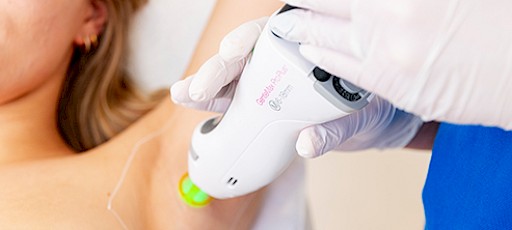
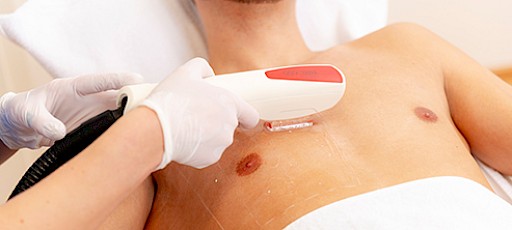
As strawberry skin is often a combination of clogged pores and irritated hair follicles, the skin needs a treatment that is both precise and gentle. This is exactly where professional laser therapy comes in. Specialist expertise is essential to assess whether the cause is mechanical (due to shaving) or genetic (due to keratinisation). Only by precisely adjusting the laser parameters to your individual skin condition can the hair root be effectively deactivated without putting additional strain on the sensitive skin surface.
Find out more about the success factors of laser hair removal!
Say goodbye to strawberry skin - the solution at a glance
Conventional methods such as shaving or waxing often exacerbate the problem of strawberry skin as they constantly irritate the skin surface and promote the ingrowth of hairs. Laser hair removal offers the most technologically advanced solution here:
- Elimination of the dark spots: The laser destroys the hair root directly in the follicle. Without the remaining hair stubble, the dark shadow under the skin's surface disappears immediately.
- Chance of refining the pore structure: As no new hair grows back, the follicle openings are no longer widened. The skin texture can therefore be refined, the pores tighten and the "strawberry look" disappears.
- Stopping the inflammation cycle: Without shaving, there are no more micro-injuries and ingrown hairs. Even with a tendency to keratosis pilaris, many patients report a significant improvement, as the mechanical irritation of daily hair removal is completely eliminated.
In most cases, strawberry legs are the result of the skin being overstretched by shaving and epilation. While peelings and creams often only help superficially, laser hair removal gets to the root of the problem. They rid your skin of dark spots and inflammation and give it back the even, silky texture you desire. Give your legs the upgrade to permanent smoothness and say goodbye to the "strawberry look" for good.
Are you interested in laser hair removal?
Arrange your free consultation or trial appointment!




Frequently asked questions about strawberry skin
Strawberry skin describes a skin appearance with many small dark or red spots - not an independent disease. These are caused by visible hair follicles, blocked pores or ingrown hairs and are visually reminiscent of the surface of a strawberry.
No, strawberry skin is generally harmless and not a medical problem. However, it can be perceived as cosmetically unpleasant and indicate irritated or overstressed skin. However, a doctor should be consulted in the event of inflammation.
Blocked pores are one of the most common causes. Sebum, keratin and dead skin cells collect in the follicle openings, which oxidise and become visible as dark spots. Shaving also favours strawberry legs: As the hair is only cut off at the surface of the skin, dark stubble remains. At the same time, the skin can become irritated, causing ingrown hairs and small inflammations. In some cases, a genetic predisposition such as keratosis pilaris also plays a role, which further intensifies the uneven skin texture.
Regular exfoliation can help to remove dead skin cells and cleanse pores. However, they usually only treat the surface and do not solve the actual cause. In order to change the skin's appearance at the root, permanent hair removal can be useful.
Keratosis pilaris is a genetic keratinisation disorder, while strawberry skin is a general appearance. However, keratosis pilaris can be a cause of the skin's appearance.
The most effective method for long-term improvement is laser hair removal. It works directly on the hair root, reduces hair growth and thus prevents dark spots and ingrown hairs.
This depends on the cause and the treatment chosen. Laser hair removal usually requires several sessions, but the first visible improvements often appear after just a few treatments.
A dermatological examination is advisable if there is additional pain, marked redness, itching, a feeling of warmth, pustules or recurring inflammation.
Permanent hair removal can improve the appearance of the skin in many cases, especially if visible hair stubble, ingrown hairs or irritation caused by shaving are the main problem. Less hair regrowth often also means less friction, less shaving and therefore fewer triggers for ingrown hairs or pseudofolliculitis. DermNet® states that this can be a sensible option, especially for recurring shaving-related problems.
However, it is important to be realistic: permanent hair reduction is not automatically the solution for every form of strawberry skin. If keratosis pilaris or another keratinisation disorder is the main cause, hair reduction can partially improve the appearance, but does not necessarily eliminate the underlying skin tendency.