
Avoid razor bumps: Why your skin rebels after shaving - and how to stop the cycle
For many people, smooth, well-groomed skin is an integral part of their daily routine. But for just as many, the fresh feeling of shaving is followed by disillusionment: burning, redness and unsightly, often painful "razor bumps". What appears on the surface to be a minor beauty problem is often a real burden in everyday life for those affected. But why does the skin react so sensitively and why do creams often only help in the short term? Find out how you can finally calm your skin.
The most important facts about razor bumps in brief
- Razor bumps are often caused by micro-injuries, irritated hair follicles and ingrown hairs.
- Particularly sensitive skin, curly hair and frequent shaving increase the risk.
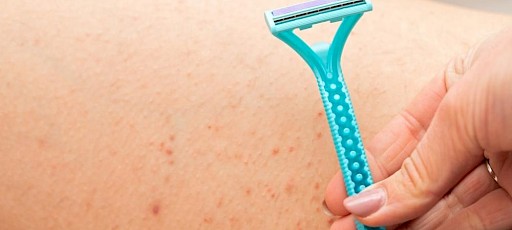
- Typical symptoms are redness, small pustules, burning and painful nodules.
- Gentle care, sharp blades, cooling and the right shaving technique can help in the short term.
- Razor bumps can often only be reduced permanently if the mechanical irritation of shaving is removed - e.g. by professional laser hair removal.
Stress for the skin: how razor bumps develop
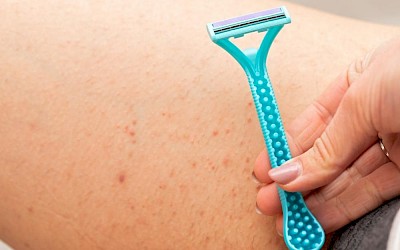
What we colloquially refer to as razor bumps is usually caused by mechanical stress. As soon as the blade glides over the skin, three things happen simultaneously:
- Micro-injuries: The sharp blade not only removes hair, but also causes microscopic abrasions in the protective skin barrier.
- Follicle irritation: The pull on the hair stresses the hair follicle (the "pocket" in which the hair sits). The skin responds with a localised inflammatory reaction, causing redness and swelling.
- Misdirected regrowth: The short-cut hair often has a sharp edge. When it grows back, it can get caught in the hair canal, curl up or grow back into the tissue from the side.
Not all razor bumps are the same as acne
Shaving-related pimples and inflammation are not automatically synonymous with classic acne. It is often a localised reaction of the hair follicles to shaving, friction and regrowing hair rather than a typical hormonal acne-related process. This distinction is important because although the appearance of the skin may be similar, the cause is different.
What factors increase razor bumps?
Whether the skin remains calm after shaving or reacts more strongly depends heavily on the shaving technique and individual factors. Typical intensifiers are
- Micro-injuries caused by the blade
- Shaving over the same area several times
- shaving against the direction of growth
- Blunt or unsuitable blades
- Dry shaving or lack of lubricating film
- Friction, sweat or tight clothing directly after shaving
The more intensively and frequently these stresses occur, the more likely the skin is to react with irritation and inflammation.
Avoid razor bumps: short-term solutions
Razor bumps are often caused by irritated skin, ingrown hairs or incorrect shaving technique. The discomfort can often be alleviated with the right measures:
- Cool the skin: Cooling compresses or aloe vera soothe irritated skin and relieve redness.
- Gently exfoliate: Mild exfoliation removes dead skin cells and helps to prevent ingrown hairs.
- Moisturise: Moisturising products without alcohol support the regeneration of the skin.
- Make sure the blades are clean: Regularly changing razors reduces bacteria and skin irritation.
- Adapt your shaving technique: Shaving in the direction of growth and applying less pressure to the skin can reduce irritation.
Although these measures can alleviate razor bumps in the short term, they often do not solve the problem permanently. This is because many people experience skin irritation again after the next shave at the latest.
Why does skin irritation recur after shaving?
Many sufferers experience a recurring cycle of shaving, skin irritation, healing and shaving again. If the skin is regularly subjected to mechanical stress, this irritation-inflammation cycle can persist. This does not mean that careful shaving is pointless - a good shaving technique can certainly reduce the risk. However, if you have sensitive skin, thicker hair growth or a tendency to ingrown hairs, symptoms can still recur.
Why does the problem often feel so persistent?
Not all skin reacts in the same way. The extent to which razor bumps occur depends, among other things, on
- the individual skin barrier
- the hair structure, for example whether the hair is thick or curly
- the density of the hair follicles
- the frequency of shaving
- the genetic predisposition
Stronger or more curly hairs in particular tend to grow back unfavourably after shaving and cause additional irritation to the skin. At the same time, sensitive or dry skin often reacts more quickly with redness and inflammation. These differences explain why shaving is virtually problem-free for some, but causes repeated discomfort for others.
What does this mean for the treatment of ingrown hairs?
Care products can soothe the skin, support the skin barrier and alleviate discomfort in the short term. However, they do not always change the basic triggers - i.e. the repeated mechanical stress caused by shaving and the re-growth of hair. This is why discomfort can recur despite good care.
As long as hair is regularly removed by shaving, new micro-injuries can occur and hair that grows back can behave unfavourably again or grow back into the skin. This can perpetuate the irritation-inflammation cycle. It is precisely at this point that many sufferers consider longer-term alternatives.
If shaving regularly leads to irritation, ingrown hairs or inflammatory changes, purely soothing care is often not enough to break the cycle permanently. In such cases, permanent hair removal can be useful because it can reduce the frequency of shaving and thus the recurring mechanical irritation. Whether this approach is suitable always depends on the skin type, hair structure and individual symptoms.
Laser hair removal: the causal solution instead of combating symptoms

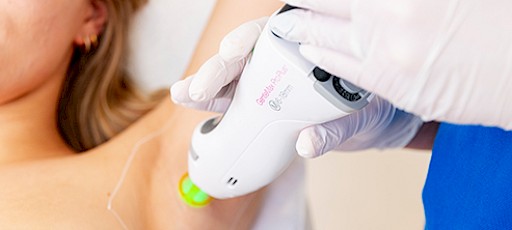
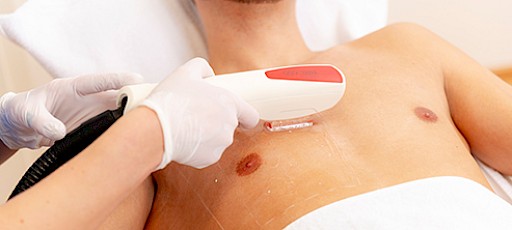
Conventional care products can soothe the skin in the short term and relieve razor bumps, but they do nothing to change the actual trigger: the mechanical irritation of shaving and the problematic regrowth of hair. This is where laser hair removal comes in as the only method that gets to the root of the problem:
- Stops the mechanical irritation: the aim of laser treatment is to permanently destroy the hair root. Where hair no longer grows, shaving is no longer necessary. This completely eliminates the daily stress caused by blades and micro-injuries and you avoid razor bumps completely.
- Prevents ingrowth: As the laser gradually refines the hair structure and stops growth, there are no more sharp stubbles that could grow in or irritate the follicle.
- Lasting skin soothing: Without the constant irritation, your skin gets the opportunity to deeply regenerate. Chronic inflammation heals and the complexion becomes permanently smooth, clear and even.
Why expert quality makes the difference in laser hair removal
As the skin is often already chronically irritated or inflamed in the case of razor bumps, the highest level of expertise is required when choosing a permanent solution. Professional treatment requires precise knowledge of skin physiology and state-of-the-art technology. Only those who match the parameters precisely to your skin and hair type can guarantee a safe application that is gentle on the already stressed tissue and at the same time delivers maximum results.
When should skin irritation after shaving be checked by a doctor?
Medical clarification is advisable if the symptoms are very painful, recur repeatedly, larger pustules or pronounced inflammation occur or if significant marks or scars remain after healing. It should then be checked whether there is a more pronounced follicular inflammation or another skin condition in addition to simple shaving irritation.
Conclusion: How to avoid razor bumps
Razor bumps are a clear signal from your skin that the mechanical stress caused by regular shaving is too great. They become part of a never-ending cycle that is constantly fuelled by shaving and hair growth and can only be alleviated by conventional means.
Laser hair removal offers a decisive solution here: you are not only investing in smooth skin, but also in the long-term health and calmness of your complexion. Say goodbye to short-term emergency solutions and opt for a life without the stress of shaving.
Are you interested in laser hair removal?
Arrange your free consultation or trial appointment!




Frequently asked questions about razor bumps
Razor bumps are caused by small injuries to the skin, irritated hair follicles and ingrown hairs after shaving.
Cooling, aloe vera, alcohol-free care products and gentle exfoliation can soothe the skin and alleviate discomfort.
Recurrent razor bumps are often caused by regular mechanical stress on the skin and ingrown hairs.
Yes, because the frequency of shaving is reduced and fewer hairs can grow in.
No. Razor bumps are mainly caused by mechanical irritation of the skin and ingrown hairs.
No. Razor bumps are usually caused by ingrown hairs or irritated hair follicles. They are typically small red pustules or inflamed nodules that often only appear hours or days after shaving. Razor burn, on the other hand, is a direct skin irritation caused by the shaving itself. The skin burns, tightens or is reddened - similar to a slight abrasion.